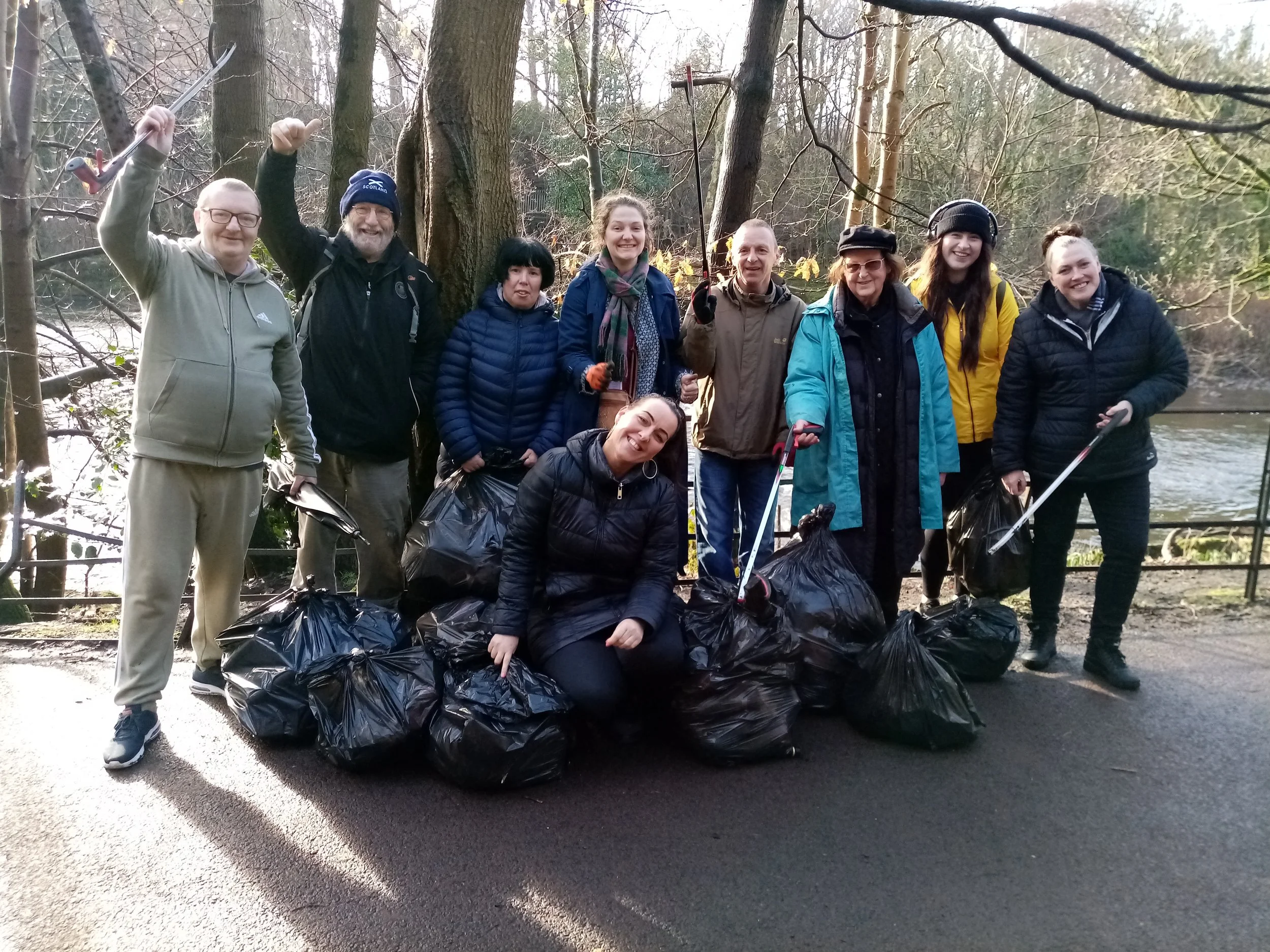
New evidence: Community is key in tackling health inequalities
Newly published evidence shows the clear impact that community-led health organisations have on the health and wellbeing of their communities.
While many community leaders and public health experts have long argued for the positive impact of these vital organisations, this large-scale, rigorous, and theory-based evaluation clearly shows community is key in tackling health inequalities.
Developed as part of the CommonHealth Assets research project, the case studies show improved outcomes across all measures of health and wellbeing for people involved with community-led organisations.
This work has been funded by the National Institute for Health and Care Research and led by Glasgow Caledonian University, with contributions from a range of partner organisations including SCHW.
The profiled organisations include SCHW partners Annexe Communities in Glasgow, Getting Better Together in Shotts, and Healthy n Happy and Healthy Valleys, both in South Lanarkshire.
These case studies show that the creative and varied activities these organisations deliver lead to improvements across a range of outcomes, with arts and crafts improving mental wellbeing and educational activity driving positive health outcomes.
Evidence that community-led approaches work
Andrew Paterson, Policy and Research Officer, who led on this work for CHEX, said:
“Understanding the value of what these organisations deliver, often on a shoestring budget, is crucial as Scotland faces historic, unequal, and avoidable differences in people’s health.
“We know there is a 25-year difference in how long communities from the most and least deprived areas in Scotland live in good health. And the UK now sits only above the United States in measures of healthy life expectancy amongst wealthy nations.
“Now, as we see a welcome policy shift towards prevention, the Common Health Assets research makes it clear that without these organisations, communities would undoubtedly lose out on not only a source of social connection and mental wellbeing, but also a proven way of improving key health outcomes."